Stop and Search
1. Stop and Search
Stop and search powers are an important tool our officers use in your community every day, to help prevent and detect crime and make where you live a safer place.
We largely make use of intelligence and information either gathered by our teams or provided to us by the public so we can target stops in areas where we know criminal activity may occur, and on those we believe to be involved in this.
It is not a power used lightly, and police officers must use it lawfully and proportionately, but it also enables us to further progress investigations without the need to unnecessarily arrest a person.
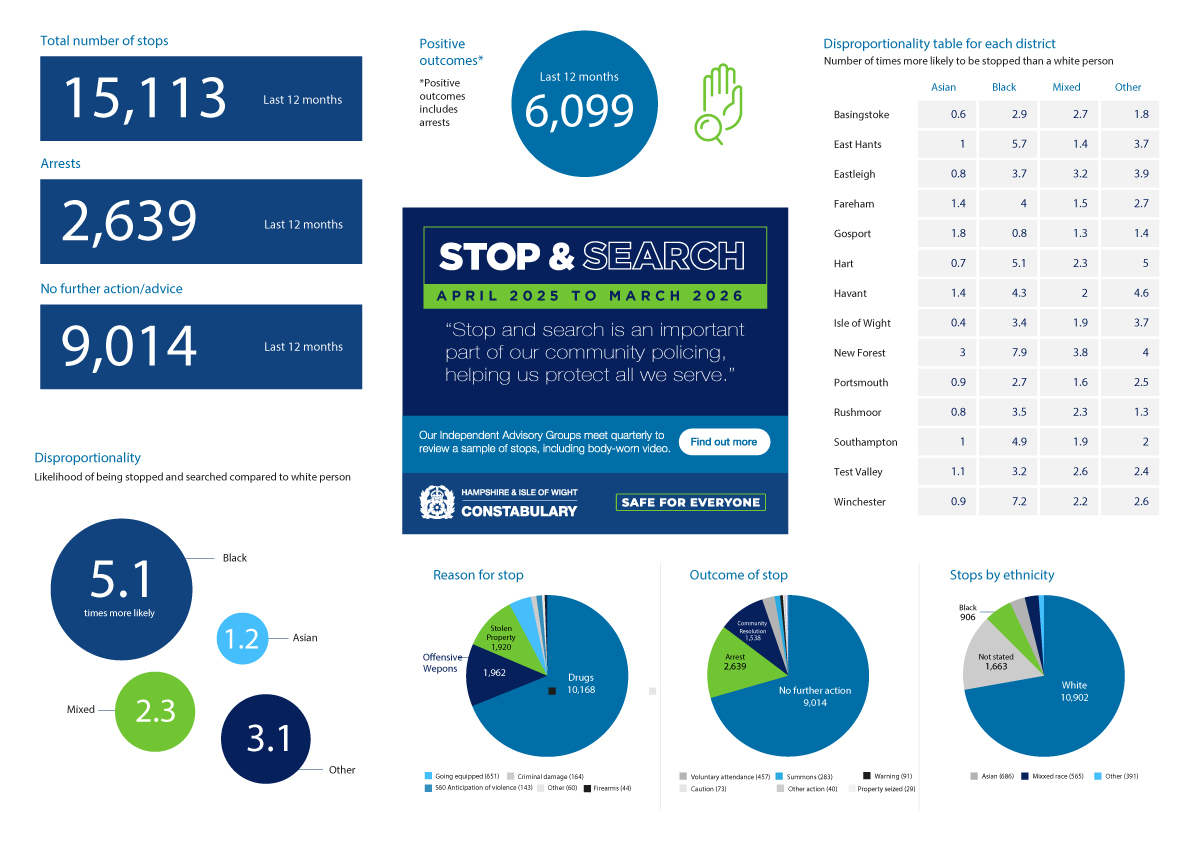
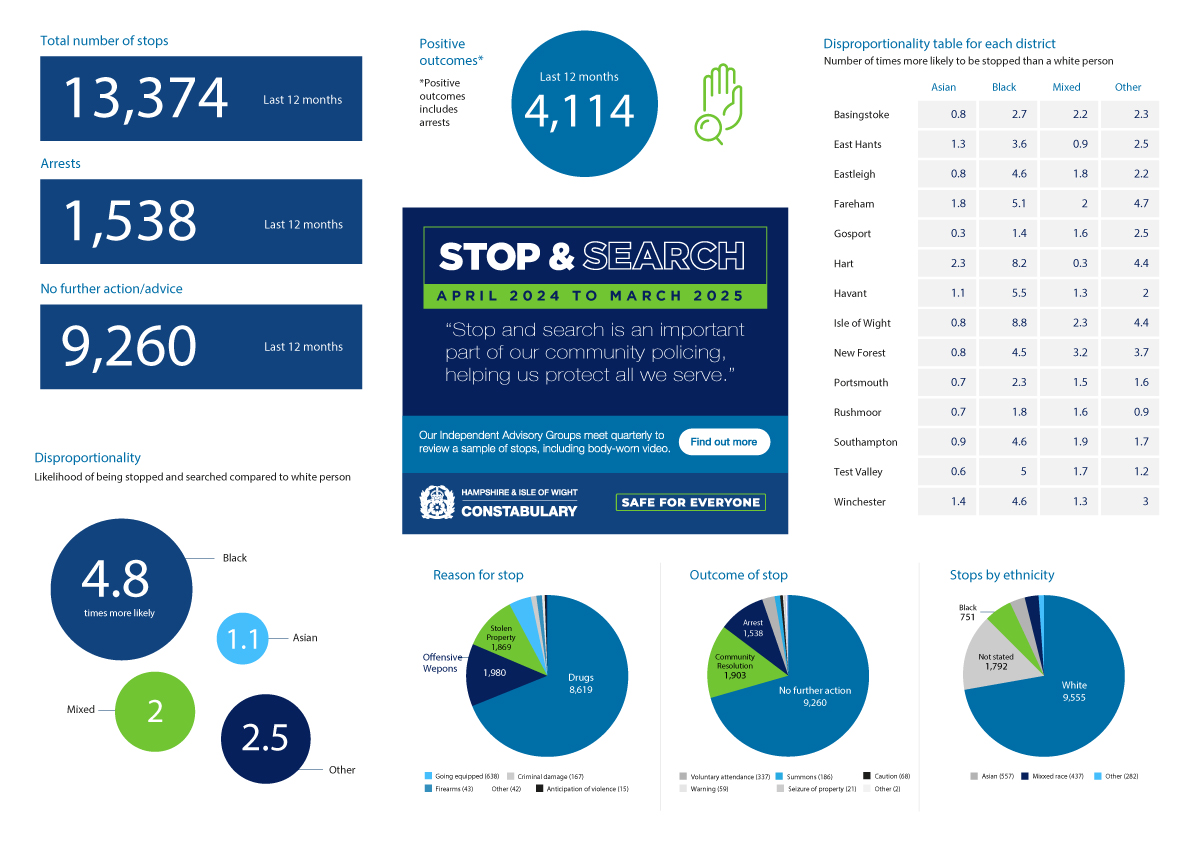
As a force, we strongly believe in the open and transparent use of these powers and making sure we are explaining how we utilise them to our communities. This includes the annual publication of data on the use of these powers at a whole force level, and quarterly updates from district commanders on how their officers are specifically using stop and search to address criminal activity where you live.
You can find out more below on what you can expect from us should you be stopped, your rights if you are stopped and how you get involved in the scrutiny of how officers are using stop and search in your community.
In order for us to carry out a stop and search of you, an officer must have a good reason for this and is required to tell you what that reason is. It's really important you are aware of your rights at such a time, and it is an officer's responsibility to ensure these are protected.
There are a number of situations in which a police officer can utilise stop and search powers to detain a person for a search. These can include, although are not limited to, the reasonable belief you or a vehicle you are in:
- have an item present which has been stolen
- could be carrying an object which has been made or adapted to allow you to commit theft, fraud, criminal damage, or offences related to protests
- are in possession of a dangerous or an offensive weapon, or a corrosive substance
- have any evidence which could be related to particular crimes
- could be carrying drugs
- have a weapon that either has been used, or is intended for use, in an incident of serious violence
When you are detained by an officer for a stop and search, they must always explain why this is happening and why you are being asked to account for your actions or presence in an area. The officer should be police and respectful at all times.
While the process may take a bit of time, it should be handled as efficiently as possible.
When stopped, you will be asked for:
- your name and address
- your date of birth
- your ethnicity
While you may wonder why you are being asked your ethnicity, this information plays an important role in how we review our use of these powers and communities most impacted by them.
Any member of the public can be stopped, but the safeguarding and welfare of a person will be considered at all times by the officer conducting it.
Most commonly, a stop and search will happen in a public place, and an officer may require you to remove a coat, jacket or any gloves you are wearing. Should you be wearing an item of clothing for religious reasons and an officer requires this to be removed, then they must take you away from public view for this to happen.
During a search, officers should have their body-worn video cameras on and be recording the interaction, which can then be reviewed by supervisors and scrutiny panels subsequently.
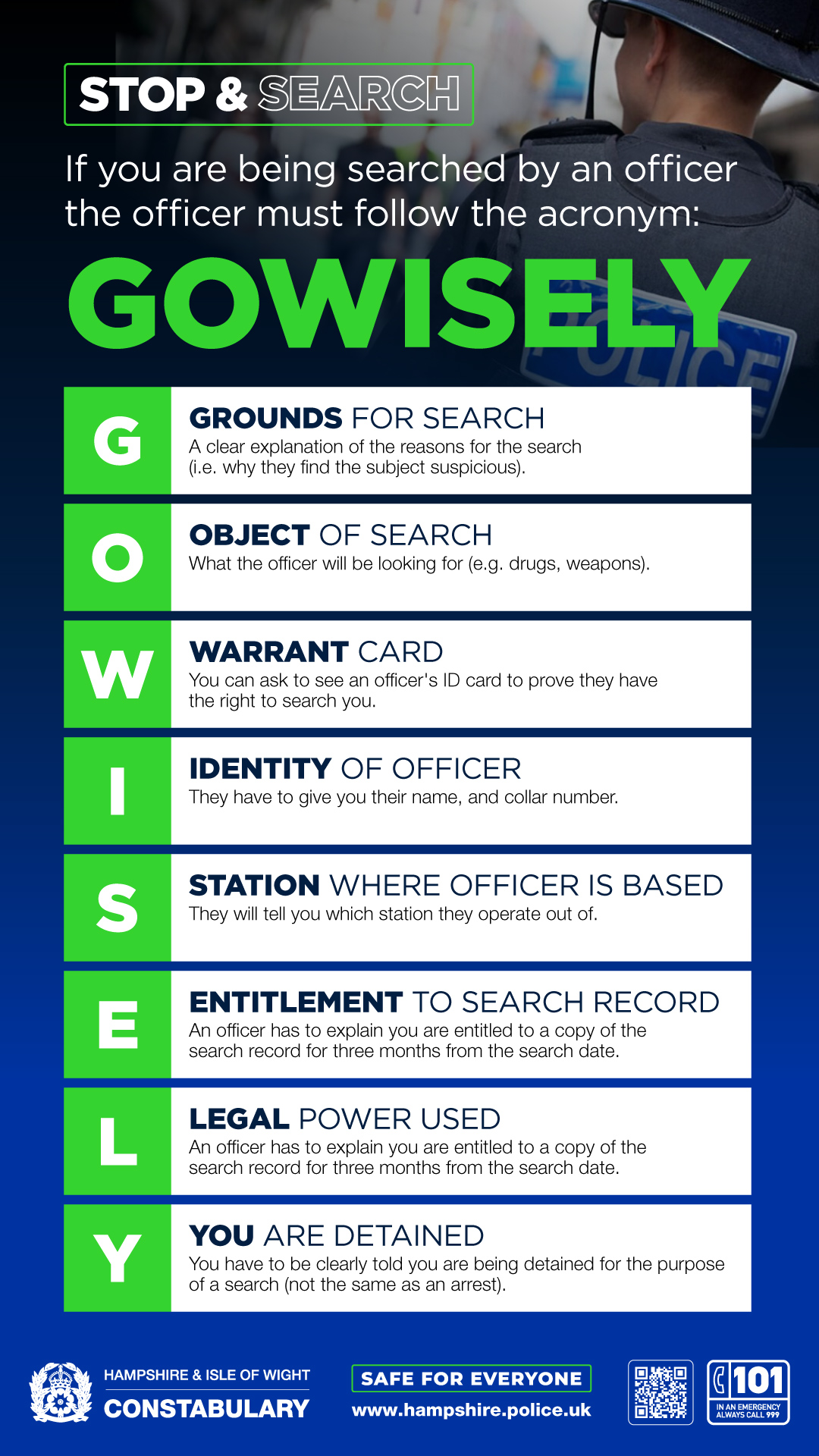
Police officers follow the acronym GO WISELY when carrying out a stop, with each letter standing for information which must be supplied to you should you be stopped in such circumstances.
While they follow this acronym to ensure all the right information has been provided to you, they may do this in differing order which will often depend on specific circumstances at the time of a search.
It is vitally important to us that the community are able to provide feedback to us and scrutinise how we use these powers. We know that being stopped and searched has a significant impact on an individual and a community, and that historically these powers have disproportionately affected minority ethnicities.
The most simple way to scrutinise and help improve how we use these powers is to view the quarterly data for your community which you can do so by selecting them from the list below, we also publish these on our Facebook pages for each district and review any comments or feedback received from these posts.
However, you can also join our Community Scrutiny Panels, to help shape the fair and accountable use of these powers in your area. The panels look at real examples of these and other powers, including use of force, to provide independent community insight and challenge and help us develop even greater understanding of how it affects different groups.
You don't need specialist knowledge for this, just a desire for fairness, community voices being heard and constructive discussion.
Find out more here.
If you want to look at how we are utilising our powers where you live, then please click on the link to your town or city below, where you will be able to see quartlery data and messages from your district commander.
Where can I view data for the whole of Hampshire and the Isle of Wight?
We publish data annually on the stop and search powers used for the entirety of our force area, which you can view here.