
Officers in north and east Hampshire make 20 arrests and seize 16 vehicles in multi-force operation
Main article content
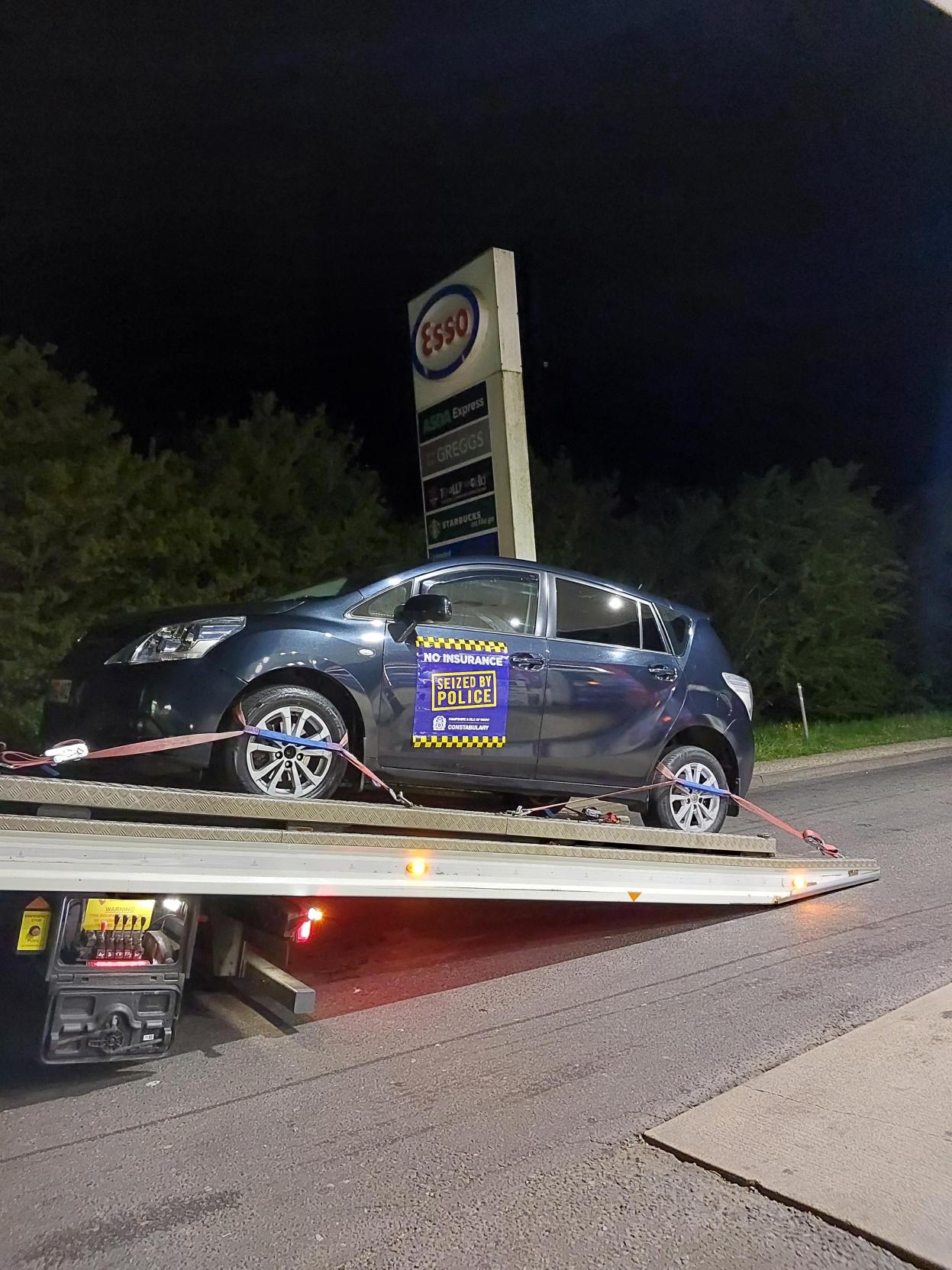
Target high harm offenders who use the road network – that was the aim of a recent three-day operation in Hampshire.
Scores of officers arrested 20 people and stopped 96 vehicles during the operation, which took place between Tuesday 21 April and Thursday 23 April.
They patrolled arterial routes in the north and east of the county, using automatic number plate recognition (ANPR) to target those people who go across force boundaries to carry out crimes.
Operation Pandilla was co-ordinated with nine other forces, including the Metropolitan Police Service, Surrey Police, Thames Valley Police and Sussex Police.
Support was also provided from the sky, via a fixed-wing aircraft from the National Police Air Service.
In Hampshire, officers made 20 arrests, stopped 96 vehicles and seized 16 of them, and made 15 drugs seizures.
Locations covered included Aldershot, Basingstoke, East Hampshire, Fareham and Gosport, Havant and Waterlooville, Portsmouth, Test Valley and Winchester.
Incidents included:
- Officers stopped a car on the A3M northbound near Petersfield at around 5.15pm on Tuesday 21 April. Three phones were found in the car, showing suspected marketing messages for drugs. A 26-year-old man from Kent and a 25-year-old woman from Fareham were arrested on suspicion of being concerned in the supply of a Class A drug. They have since been released on police bail with conditions, pending further enquiries
- At around 5.40pm on Thursday 23 April, officers in an unmarked car witnessed suspected drug-related activity in the car park of the Horizon Retail Park in Farnborough. Officers approached the occupant of a parked vehicle and made a search. Several small bags of suspected Class A drugs were found in the car. A 26-year-old man from London was arrested on suspicion of possession with intent to supply a controlled drug of Class A. He has been released on police bail while our investigation continues
- On the evening of Wednesday 22 April, officers in an unmarked located a vehicle with four men inside in Widley Walk, by Portsdown Hill, Portsmouth. Cannabis, cannabis vapes and cash were found in the vehicle. Further items were found during related address searches, including suspected Class A drugs and weapons, such as a knuckle duster. A 20-year-old man from Waterlooville, a 19-year-old man from Havant, a 19-year-old man from Waterlooville and an 18-year-old man from Havant were arrested and are currently on police bail pending further enquiries.
Inspector Nikki Hopkins, from the Northern Neighbourhood Enforcement Team, said: “This Operation Pandilla has been another success, as we have disrupted criminal activity across force boundaries and made a number of arrests.
“Sharing intelligence with other forces means we can better tackle high harm offenders, including those involved in drug supply.
“We will continue to look at all opportunities and tactics available to us to disrupt offenders and bring criminals to justice.”